High-Quality Silicon Carbide Products | Advanced Ceramic Solutions

Silicon Carbide vs. Graphite: More Than Just Carbon Cousins
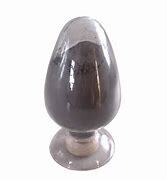
(what is the difference between silicon carbide and graphite)
We see carbon everywhere. It’s in our pencils, our diamonds, and even our own bodies. But sometimes, carbon gets mixed up with other elements. This creates amazing materials with unique abilities. Two such materials are silicon carbide and graphite. They might seem similar at first glance. Both involve carbon. Both are useful. But dig a little deeper, and they are worlds apart. Understanding their differences helps us see why one might be used in a supercar’s brakes and the other in a simple pencil. Let’s explore these fascinating materials.
1. What Exactly are Silicon Carbide and Graphite?
Let’s start simple. Graphite is a form of carbon. It’s one of the forms pure carbon can take. Think of a pencil lead. That dark mark on paper? That’s graphite. It’s soft, slippery, and dark gray or black. Its atoms are arranged in flat sheets. These sheets stack up but slide over each other easily. This makes graphite a great lubricant. It also conducts electricity well. Graphite occurs naturally. We can also make it artificially.
Silicon carbide is different. It’s not pure carbon. It’s a compound. It’s made from silicon atoms and carbon atoms bonded together. The chemical formula is SiC. It’s not found much in nature. We make it in labs or factories. The process involves heating sand (which is silica) and carbon to very high temperatures. The result is an extremely hard, ceramic-like material. It often looks like dark crystals or grains. Think of it like super-tough sand. It’s far harder than graphite. It can withstand very high heat. Silicon carbide doesn’t conduct electricity as easily as graphite does. Its atoms form a rigid, three-dimensional structure. This makes it very strong and resistant to wear.
So, graphite is pure carbon arranged in slippery layers. Silicon carbide is a tough compound of silicon and carbon in a rigid network. They share carbon, but that’s about where the similarity ends.
2. Why Do They Behave So Differently?
The secret lies in their atomic structure. How their atoms are arranged and bonded dictates everything. Graphite has carbon atoms arranged in flat, hexagonal sheets. These sheets look like chicken wire. Within each sheet, carbon atoms are strongly bonded. This makes the sheet strong. But between the sheets, the bonds are very weak. Think of a stack of playing cards. You can slide the cards easily. Graphite sheets slide over each other just like that. This sliding makes graphite slippery. It’s why it works as a lubricant. It’s also why graphite is soft enough to write with. The weak bonds between sheets allow layers to flake off. This is how a pencil leaves marks on paper. The electrical conductivity comes from electrons moving easily within those strong sheets.
Silicon carbide is built differently. Its silicon and carbon atoms are linked in a strong, three-dimensional network. Imagine a giant, rigid cage. Every atom is tightly bonded to its neighbors in all directions. This structure is incredibly hard to break or deform. It’s like diamond, which is another form of pure carbon with a similar 3D structure. This makes silicon carbide extremely hard. It resists scratching and wear. It also has a very high melting point. It can handle intense heat without softening. This rigid network doesn’t allow layers to slide. So silicon carbide isn’t slippery like graphite. Its electrical properties are also different. While graphite is a conductor, silicon carbide is a semiconductor. It can conduct electricity under certain conditions, but not as easily as graphite. The strong bonds throughout the structure make it very stable chemically. It doesn’t react easily with other substances. Graphite loves heat but hates pressure. Silicon carbide laughs at both heat and pressure. Their atomic blueprints are simply not the same.
3. How Are They Made?
The way we get these materials also highlights their differences. Graphite is often mined. Large deposits exist naturally. We dig it out of the earth. Natural graphite needs refining. We clean it to remove impurities. We also make synthetic graphite. This involves heating carbon-rich materials like petroleum coke or coal tar pitch to very high temperatures. This process is called graphitization. It rearranges the carbon atoms into the layered structure. It can take days or weeks at temperatures over 2500°C. The result is pure graphite. We can shape it into blocks, powders, or fibers.
Making silicon carbide is a different story. It’s rarely found in usable natural forms. We synthesize it almost entirely. The main method is the Acheson process. Edward Acheson discovered it in 1891. We mix silica sand (SiO2) and carbon (like coke or coal) together. We place this mixture around a graphite core in a large electric furnace. Then we pass a powerful electric current through the graphite core. This generates intense heat, over 2000°C. The heat causes a chemical reaction. The silica and carbon combine to form silicon carbide crystals. The reaction looks like this: SiO2 + 3C → SiC + 2CO. After cooking for several days, we get chunks of silicon carbide. We crush these chunks into different sizes. We can also make very pure silicon carbide using more advanced methods. These methods involve vapor deposition or special furnaces. The key point is silicon carbide is mostly man-made through high-temperature reactions. Graphite can be natural or synthetic, but silicon carbide is almost always cooked in a furnace.
4. Where Do We Use Them? Their Key Applications
Because they are so different, silicon carbide and graphite end up in very different jobs. Graphite’s softness and slipperiness make it perfect for lubricants. We use it in locks, machinery, and even bike chains where oil might not work. Its ability to conduct electricity makes it essential for electrodes. Big graphite electrodes are used in electric arc furnaces to melt steel. We make batteries with graphite. Lithium-ion batteries use graphite as the anode. Pencils, of course, rely on graphite. Crucibles for melting metals often use graphite because it handles heat well. We use it in brake linings and clutch materials. Graphite fibers reinforce composite materials in airplanes and sports gear. Its high thermal conductivity helps in heat sinks for electronics.
Silicon carbide is the tough guy. Its hardness makes it a champion abrasive. We use it in sandpaper, grinding wheels, and cutting tools. It grinds down glass, stone, and metal. Its incredible heat resistance makes it valuable for high-temperature applications. Kiln furniture, the shelves that hold pottery in a kiln, is often made of silicon carbide. It doesn’t warp under the heat. We use it in parts for furnaces and incinerators. Car brakes, especially high-performance ones, use silicon carbide composites. They handle the intense heat of racing. In electronics, silicon carbide semiconductors are a big deal. They work better than silicon at high voltages, high frequencies, and high temperatures. This makes them great for electric car power systems, solar inverters, and efficient power supplies. Silicon carbide ceramics are used in armor plates and wear-resistant parts. We also use it as a refractory material to line furnaces. So, graphite is often the slippery conductor or the heat-resistant lubricant. Silicon carbide is the hard, tough, heat-defying abrasive or semiconductor. Their applications rarely overlap because their properties are opposites.
5. FAQs: Clearing Up Common Confusions
People often mix up silicon carbide and graphite. Let’s answer some frequent questions.
Are silicon carbide and graphite the same thing? No, absolutely not. Graphite is pure carbon. Silicon carbide is a compound of silicon and carbon. Their structures and properties are very different.
Which one is harder? Silicon carbide is much harder than graphite. Graphite is soft enough to write with. Silicon carbide is hard enough to grind other materials. It’s one of the hardest substances we use commonly.
Why is graphite slippery but silicon carbide isn’t? Graphite has layers that slide easily. Silicon carbide has a rigid, interlocked structure. Nothing slides easily in silicon carbide. It’s like comparing ice to concrete.
Does silicon carbide conduct electricity like graphite? Not really. Graphite is a good conductor because electrons flow freely in its layers. Silicon carbide is a semiconductor. It conducts electricity, but not as freely. We control its conductivity for electronic devices.
Can graphite be used for sandpaper? No, graphite is too soft. It would just smear. Silicon carbide is hard and sharp. It’s perfect for abrasives like sandpaper.
Is silicon carbide natural? Mostly no. We find tiny amounts, but almost all silicon carbide we use is synthetic. Graphite can be natural or synthetic.
Why use silicon carbide in car brakes? Silicon carbide handles extreme heat without wearing down much. It provides stable braking performance even when very hot. Graphite is sometimes used in brake pads too, but for different reasons like lubrication.
Which one is more heat resistant? Both handle heat well, but silicon carbide has a higher melting point. It can withstand temperatures above 2000°C easily. Graphite also withstands high heat but might oxidize faster in air.
Are they expensive? Synthetic graphite can be pricey. High-purity silicon carbide, especially for electronics, is also expensive. But both are valuable for their unique properties.
(what is the difference between silicon carbide and graphite)
Can I find them at home? Yes! Graphite is in your pencil lead. Silicon carbide might be on your sandpaper or in your car’s brake pads if it’s a performance vehicle.
RELATED POSTS

What are Commonly Used Milling Cutter Coatings?

Bearing steel crude steel production rise also affects the price of the nsk 6908

The introduction of a licensing system for import of products in Algeria has facilitated the market for hts code

Introduction to the production and function of HCG and the application of anonymous hiv testing

Market Trend and Demand The steel sector continues to rise Will Affact the Price of Nickel Titanium Alloy
