High-Quality Silicon Carbide Products | Advanced Ceramic Solutions

The Atomic Superglue: What Makes Silicon Carbide Unbreakable?
(what type of bond is solid silicon carbide)
Ever wonder what holds incredibly tough materials together? Think about sandpaper grinding through metal or ceramic brakes stopping a speeding car. Often, the secret lies deep within, in the atomic bonds. Today, we focus on a true tough guy: silicon carbide. Its exceptional hardness and heat resistance aren’t magic. They come from a specific type of atomic handshake inside the material. Let’s crack open the mystery of the silicon carbide bond.
Main Product Keyword: Silicon Carbide Bond
1. What Exactly is the Silicon Carbide Bond?
Silicon carbide isn’t a simple lump of similar atoms. It’s a compound. It’s made from silicon (Si) and carbon (C) atoms. These atoms don’t just sit next to each other loosely. They connect very strongly. The force holding them together is a covalent bond. Covalent bonds happen when atoms share electrons. Think of it like two friends tightly holding hands, sharing something valuable between them. In silicon carbide, each silicon atom forms four strong covalent bonds with four nearby carbon atoms. Similarly, each carbon atom forms four covalent bonds with four silicon atoms. This creates a giant, rigid, three-dimensional network. It’s like a super-strong crystal lattice built entirely from shared electrons. This structure is the core reason silicon carbide is so hard and stable. It’s not a metal held by free electrons. It’s not salt held by simple opposite charges. It’s a network solid, bound by shared electrons in a continuous framework.
2. Why is the Silicon Carbide Bond So Strong?
Strength comes from the nature of the covalent bond and the structure it forms. Sharing electrons directly creates a very powerful link between atoms. Breaking a covalent bond requires significant energy. Silicon carbide takes this further. Every atom is locked into place by four bonds pointing outwards in a tetrahedral shape (like a pyramid). This creates a massive, interconnected network. Attacking one bond means fighting against the pull of the entire surrounding structure. It’s incredibly difficult to pull atoms apart. Think of trying to break a single link in a massive, tightly woven chainmail suit. The carbon-silicon bond itself is also very strong. Both atoms are relatively small and similar in their desire for electrons. This allows for effective sharing and a short, strong bond. The bond energy is high. The rigid tetrahedral structure prevents atoms from sliding past each other easily. This combination – strong individual bonds plus a rigid, interconnected 3D network – is why silicon carbide resists scratching, deforming, and melting so well. Its bond is its superpower.
3. How Does This Bond Form in Solid Silicon Carbide?
Making solid silicon carbide requires forcing silicon and carbon atoms together under extreme conditions. They don’t just decide to link up at room temperature. The most common industrial method is the Acheson process. Here’s a simplified view. Pure silica sand (SiO₂, silicon and oxygen) and petroleum coke (mostly carbon, C) are mixed together. This mixture is packed around a central graphite core acting as a heater. Massive electrical currents are passed through the core. This generates intense heat, reaching temperatures over 2200°C (almost 4000°F)! At these insane temperatures, the oxygen is driven off from the silica. The hot carbon then reacts aggressively with the freed silicon atoms. The silicon and carbon atoms get close enough. Their outer electrons interact. They form those crucial covalent bonds. As the material cools, the atoms arrange themselves into the stable, tetrahedral lattice structure characteristic of silicon carbide. The result is a rough, crystalline mass. This is then crushed and processed into powders or shaped components. The extreme heat is essential. It provides the energy needed to break the starting materials apart and forge the strong silicon-carbon covalent bonds.
4. Real-World Applications: Where the Tough Bond Shines
The incredible strength and stability of the silicon carbide bond make it invaluable. It excels where other materials fail under heat, wear, or chemical attack.
Abrasion & Wear: Its extreme hardness makes it perfect for grinding, cutting, and sanding. You find it in sandpaper grit, cutting tools for metals and composites, and wear-resistant linings for pipes and equipment handling abrasive slurries.
High-Temperature Hero: Silicon carbide doesn’t soften or melt until extremely high temperatures (around 2700°C). This makes it ideal for furnace parts (kiln furniture, heating elements), components in rocket nozzles and jet engines, and parts in high-temperature heat exchangers.
Demanding Electronics: Its bond structure gives it unique electrical properties. It can handle high voltages, frequencies, and temperatures much better than silicon. This makes it crucial for power electronics in electric vehicles, efficient power supplies, and high-power radio frequency devices.
Armor Protection: Lightweight yet incredibly hard, bonded silicon carbide ceramics are used in advanced body armor plates and vehicle armor. The strong covalent network helps shatter and deflect projectiles.
Chemical Resistance: The stable bond makes silicon carbide highly resistant to acids, alkalis, and molten salts. It’s used in seals, pump components, and parts for chemical processing equipment.
Refractory Grit: Its toughness and heat resistance make it a key ingredient in refractory bricks and mortars lining industrial furnaces.
5. Silicon Carbide Bond FAQs
Let’s tackle some common questions about this remarkable material and its atomic glue.
Is the silicon carbide bond ionic or covalent? It’s primarily covalent. While there might be a tiny bit of ionic character due to silicon being slightly less electronegative than carbon, the overwhelming nature of the bonding is atoms sharing electrons equally in a network.
Why isn’t silicon carbide a metal? Metals have “sea of electrons” metallic bonding. Silicon carbide lacks this. Its electrons are tightly bound in specific covalent bonds between atoms. This makes it a ceramic, not a conductor like metal (though it does have semiconductor properties).
Can silicon carbide conduct electricity? Pure silicon carbide is a semiconductor. Its electrical conductivity depends on the specific crystal structure and any added impurities. This semiconductor property is vital for its electronic applications.
Is diamond stronger than silicon carbide? Diamond (pure carbon with covalent bonds) is generally harder on the Mohs scale. But silicon carbide is extremely hard and offers better thermal stability and chemical resistance in many scenarios. It’s a very close second.
Is silicon carbide naturally occurring? Yes, but very rarely. It’s found as the mineral moissanite, usually in tiny amounts within certain meteorites or specific rock types like kimberlite. Almost all silicon carbide used industrially is synthetic, made by processes like the Acheson method described earlier.
(what type of bond is solid silicon carbide)
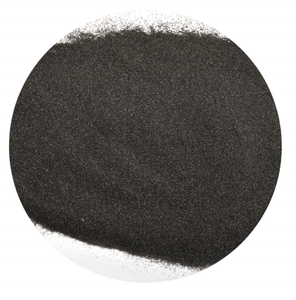
Does the bond type affect its color? Pure silicon carbide is typically black or dark green due to impurities and structural defects absorbing light. Synthetic moissanite gemstones are made very pure and can be near-colorless. The bond itself influences how light interacts with the crystal structure.
RELATED POSTS

Hollow Glass Microspheres: Pioneering Innovation Across Industries hollow glass beads

What is the use of vanadium hydride powder

is silicon carbide an ionic compound
What is Aluminum Nitride
