High-Quality Silicon Carbide Products | Advanced Ceramic Solutions

Silicon Carbide: Nature’s Tough Guy Made Tougher by Humans?
(silicon carbide man made?)
Silicon carbide. Sounds fancy. It sounds scientific. Maybe even a bit intimidating. But what is it really? And why are people so excited about making it themselves? Forget boring textbooks. Think of silicon carbide as a rock star in the world of materials. It’s incredibly hard. It handles heat like a champ. It’s tough enough to make diamonds sweat. Nature makes a little bit of this stuff. But humans? We figured out how to make it better, faster, and stronger. This is the story of how we took a naturally occurring wonder and supercharged it. Let’s dive into the world of man-made silicon carbide.
1. What Exactly is Silicon Carbide?
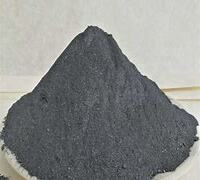
Silicon carbide is not a new discovery. It’s a compound. It’s made up of silicon and carbon atoms. They bond together in a very specific way. This bonding creates a crystal structure. This structure is incredibly strong. Think of diamond. Diamond is famously hard. Silicon carbide is nearly as hard. In fact, on the Mohs scale of hardness, silicon carbide scores a 9. Diamond is a 10. That’s seriously tough. It looks like a dark, crystalline material. Sometimes it’s almost black. Sometimes it’s greenish. It depends on purity. In its simplest form, it’s like super sand. Sand is mostly silicon dioxide. Silicon carbide replaces the oxygen with carbon. This small change makes a huge difference. It transforms a common material into something extraordinary. Its toughness and resilience are key. These properties make it special. Scientists first found tiny amounts in meteorites. They found some in certain types of rock. But these natural deposits are rare. They are usually small. They are often impure. This is why humans decided to make their own.
2. Why Bother Making Silicon Carbide Artificially?
Nature makes silicon carbide. So why do we need factories? The answer is simple. Control and quantity. Natural silicon carbide is scarce. Finding large, pure crystals is almost impossible. Think about it. You wouldn’t rely on finding gold nuggets in a stream to build a computer chip. You mine and refine it. The same idea applies here. We need silicon carbide for modern technology. We need lots of it. We need it to be very pure. We need specific shapes and sizes. Nature can’t provide that reliably. Making it ourselves gives us control. We control the recipe. We control the purity. We control the crystal size. We control the shape. This control unlocks its potential. Artificial silicon carbide performs better. It’s more consistent. It’s tailored for specific jobs. Cars, electronics, space travel – they all benefit. Without man-made silicon carbide, many advanced technologies wouldn’t exist. Or they would be much worse. Making it artificially is essential for progress. It lets us use its amazing properties where we need them most.
3. How Do Humans Create Silicon Carbide?
So, how do we make this super material? The main method is called the Acheson process. Edward Acheson discovered it way back in 1891. He was trying to make artificial diamonds. He didn’t get diamonds. He got silicon carbide instead. It was a happy accident. The process is surprisingly straightforward. It involves heat. A lot of heat. Think extremely hot. We’re talking over 2000 degrees Celsius. That’s hotter than molten lava. They take a mixture of pure silica sand and petroleum coke. Coke is a carbon-rich material from coal or oil. They mix these together. Then they pack this mixture around a graphite core. This core acts like a heating element. They pass a huge electrical current through the graphite core. The core gets incredibly hot. This intense heat cooks the sand and coke mixture. The silicon and carbon atoms react. They bond together. They form silicon carbide crystals. It’s like baking a very hard cake. After “baking” for many hours, they let it cool down. Then they break apart the mass. Inside, they find chunks of silicon carbide crystals. These crystals are crushed. They are ground. They are purified. They are shaped into whatever form is needed. Powder for polishing. Grains for abrasive tools. Bigger pieces for cutting. Or even wafers for electronics. Other methods exist now. One is called chemical vapor deposition. It builds silicon carbide layer by layer. This is great for making high-purity crystals for electronics. But the Acheson process is still widely used. It’s the backbone of production.
4. Where Do We Use Man-Made Silicon Carbide? (Applications)
You might be surprised. Silicon carbide is everywhere in modern life. You just don’t see it. Its toughness makes it perfect for grinding and cutting. Think sandpaper. The scratchy stuff. Often, the grit on high-quality sandpaper is silicon carbide. It cuts through metal, stone, glass. It shapes and smooths. Abrasive blasting uses it. It cleans surfaces. It prepares metal for painting. Cutting tools use it. Saw blades for cutting tile or stone often have silicon carbide tips. They stay sharp much longer. Car brakes are a big application. High-performance cars need brakes that work even when hot. Regular brakes fade. They get less effective. Silicon carbide brake pads? They handle the heat. They last longer. They provide consistent stopping power. Think racing cars. Think heavy trucks going down mountains. Ceramics use silicon carbide. They add it to make things stronger. Crucibles for melting metal? Silicon carbide versions last longer. They resist the heat and chemicals. Refractory bricks line furnaces. Silicon carbide bricks handle extreme temperatures. Electronics are the new frontier. Silicon carbide semiconductors are special. They handle high voltages. They handle high frequencies. They generate less heat. This makes them perfect for electric cars. They control the motor efficiently. They save energy. They are great for solar power inverters. They work in power supplies for data centers. They are finding uses in 5G technology. Even bulletproof armor uses silicon carbide plates. It’s lightweight. It’s incredibly hard. It stops bullets. From grinding metal to powering electric cars to stopping bullets, silicon carbide is a workhorse. Man-made silicon carbide makes all this possible.
5. Silicon Carbide FAQs: Your Burning Questions Answered
(silicon carbide man made?)
People have questions about silicon carbide. Here are some common ones. Is silicon carbide natural or man-made? Both. Tiny amounts occur naturally. But almost all silicon carbide used commercially is man-made. It’s made in factories using processes like the Acheson method. Is silicon carbide dangerous? Generally, no. The solid material is inert. It doesn’t react easily. It’s safe to handle. Breathing in the fine dust, like any dust, is bad. Good ventilation is important. Is silicon carbide expensive? It can be. Especially the high-purity stuff for electronics. The raw materials are cheap. But the process needs huge amounts of electricity. The purification steps add cost. For abrasive uses, it’s reasonably priced. Why use silicon carbide instead of diamond? Diamond is harder. But diamond is much more expensive. Diamond burns or breaks down at high temperatures in air. Silicon carbide stays stable. It’s a great balance of performance and cost for many jobs. Can silicon carbide be recycled? Yes. Silicon carbide grinding wheels and cutting tools can be recycled. The silicon carbide is recovered. It can be reused in other products. This makes it more sustainable. Is silicon carbide conductive? Pure silicon carbide is actually a semiconductor. It doesn’t conduct electricity like metal. But it can be made to conduct under certain conditions. This is why it’s useful in electronics. Adding certain impurities changes its conductivity. This is key for making power devices.
RELATED POSTS

how to deposit metal on silicon carbide

Effect of polycarboxylate superplasticizer on the concrete properties

How much carbon is generated during the production process of the lg replacement parts
The manufacturing process and application of carbon graphite powder

Concrete superplasticizer
