High-Quality Silicon Carbide Products | Advanced Ceramic Solutions

Titanium vs Silicon Carbide: Are They Secret Twins?
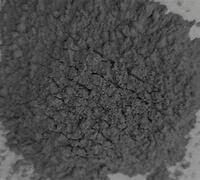
(is titanium the same as silicon carbide)
Let’s clear up a common mix-up right away. Titanium and silicon carbide sound like they might be related. Both sound tough, modern, and maybe a bit sci-fi. But are they the same thing? Not even close. Think of it like comparing a sleek sports car (titanium) to super-hard industrial sandpaper (silicon carbide). They exist in totally different worlds. This post dives deep into these two amazing materials, busting myths and showing why each is unique.
1. What Exactly Are Titanium and Silicon Carbide?
Titanium is a real metal. You find it on the periodic table, symbol Ti. It occurs naturally in the earth, mined from minerals like rutile and ilmenite. People love titanium for its incredible strength compared to its weight. It’s lighter than steel but just as strong, sometimes stronger. It also laughs in the face of rust and corrosion. Think saltwater, strong chemicals – titanium usually shrugs them off. This makes it perfect for things like jet engines, fancy medical implants (like hip replacements), high-end bicycle frames, and even some jewelry. It has a cool, slightly dark grey color.
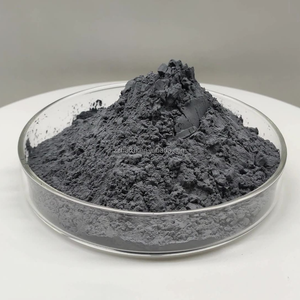
Silicon carbide (often called SiC) is a completely different beast. It’s not a natural metal. It’s a man-made ceramic. Think of taking the element silicon (like the silicon in beach sand) and bonding it tightly with carbon. The result is an incredibly hard and brittle material. Seriously hard. It’s one of the hardest substances humans can make, almost as hard as diamond. You often see it as a dark grey or black powder or crystal. Because it’s so tough, its main job is grinding, cutting, and wearing down other materials. Sandpaper? Lots of it uses silicon carbide grit. Abrasive wheels for cutting stone or metal? Yep, silicon carbide again. It also handles heat extremely well.
2. Why Are They So Fundamentally Different?
Their differences start right at the atomic level. Titanium is a pure metallic element. Its atoms are arranged in a way that allows electricity and heat to flow through it quite easily. It’s bendable (malleable) and can be stretched (ductile) when heated. Manufacturers shape it into sheets, wires, complex parts – just like other metals.
Silicon carbide is a ceramic compound. Its structure is rigid and tightly bound. This makes it fantastic at resisting heat and wear, but terrible at bending or stretching. Hit it hard, and it shatters instead of denting. Electricity? Pure silicon carbide is actually a semiconductor, meaning it can be tweaked to conduct electricity under certain conditions – a key reason it’s exploding in electronics now. Titanium is just a straightforward metal conductor.
Think about their core personalities. Titanium is the tough, lightweight, corrosion-resistant champion. Silicon carbide is the ultra-hard, heat-defying, abrasive king. One is forged in furnaces like metals, the other is synthesized like a high-tech ceramic. Different origins, different structures, different superpowers.
3. How Are Titanium and Silicon Carbide Made?
Getting titanium metal out of the ground is a big job. The main ore is ilmenite or rutile. These ores are processed to get titanium dioxide (the white stuff in paint and sunscreen). Then comes the hard part: turning that dioxide into pure metal. The Kroll process is the main method. It involves reacting titanium tetrachloride (made from the dioxide) with molten magnesium in a big, sealed furnace at super high temperatures. This produces titanium “sponge” – a porous mass. This sponge is then crushed, purified, and melted under vacuum or inert gas. Finally, it’s cast into big blocks called ingots. These ingots get rolled, forged, or machined into final products like sheets, bars, or airplane parts. It’s complex and energy-hungry.
Making silicon carbide is also intense, but different. The common method is the Acheson process. You take pure silica sand (SiO2) and mix it with petroleum coke (mostly carbon). This mix goes into a huge electric resistance furnace. Massive amounts of electricity heat the core to over 2200°C (4000°F). At this crazy heat, the carbon reacts with the silica, forcing out oxygen and forming silicon carbide crystals. The furnace runs for days. After cooling, you get a big lump of SiC crystals bonded together with some unreacted material. Workers break this lump apart. They crush, grind, and sort the crystals by size for different uses – grit for abrasives, powders for ceramics, or larger pieces for specialized parts. For high-purity electronics, even more complex chemical vapor deposition (CVD) processes are used.
4. Where Do We Actually Use Them? Applications Galore!
Titanium’s playground is vast. Its strength, lightness, and corrosion resistance make it irreplaceable in aerospace. Jet engine parts, airframes, spacecraft components – titanium is everywhere flying high. Under the sea, it’s used for submarine hulls and offshore rig components because saltwater doesn’t faze it. Doctors rely on it for bone screws, joint replacements, and dental implants because it’s biocompatible (your body doesn’t reject it). Need speed? High-performance bikes, golf clubs, and racing car parts often use titanium. It’s even in some luxury watches, eyeglass frames, and architectural facades. Chemical plants use it for pipes and tanks handling nasty stuff. Wherever you need strong, light, and rust-proof, titanium is a top contender.
Silicon carbide’s applications are driven by its extreme hardness and heat tolerance. Its oldest and biggest use is abrasives. SiC sandpaper smooths wood and metal. Grinding wheels cut stone, concrete, and glass. Blasting grit cleans metal surfaces. But it goes way beyond grinding. Crucibles for melting metal? Silicon carbide handles the heat. Car brake discs and ceramic engine parts? SiC composites offer better performance. Body armor plates? Silicon carbide ceramics can stop bullets. In electronics, it’s a revolution. SiC power semiconductors handle much higher voltages and temperatures than old silicon chips, making electric cars, solar inverters, and power supplies smaller and more efficient. Refractory bricks line industrial furnaces. Wear plates in mining equipment? Silicon carbide endures the abuse. It even appears in some high-end jewelry as a super-hard, diamond-like gemstone (marketed as moissanite).
5. FAQs: Busting the Myths About Titanium and Silicon Carbide
Let’s tackle some common questions head-on.
Q: Is titanium stronger than silicon carbide? A: Strength is tricky. Titanium is much tougher – it can bend and absorb impact without breaking. Silicon carbide is much harder – it resists scratching and wear incredibly well, but it’s brittle. So, for taking a hit? Titanium wins. For resisting scratches and abrasion? Silicon carbide wins easily.
Q: Can silicon carbide replace titanium? A: Almost never. Their properties are too different. You wouldn’t make a flexible, corrosion-resistant airplane wing from brittle SiC. Nor would you make a grinding wheel out of bendable titanium. They solve different problems.
Q: Is silicon carbide a metal like titanium? A: No. Titanium is a metal. Silicon carbide is a ceramic. Different atomic structures, different behaviors.
Q: Why is silicon carbide used in electronics if it’s a ceramic? A: Because it’s a semiconductor. Its special electrical properties, especially its ability to handle high power and heat much better than silicon, make it perfect for advanced power electronics. The ceramic hardness is just a bonus in that context.
Q: Which one is more expensive? A: Generally, high-purity processed titanium metal is more expensive than basic silicon carbide abrasive grit. But high-performance silicon carbide for electronics or advanced armor can be very costly too. It depends heavily on the purity and form needed.
(is titanium the same as silicon carbide)
Q: Are they ever used together? A: Not directly mixed, but yes! Sometimes silicon carbide particles are added to aluminum or other metals to make super-strong, wear-resistant metal matrix composites. Titanium parts might also be machined or finished using silicon carbide cutting tools or abrasives.
RELATED POSTS

The Effect of Superplasticizer

Why is sodium silicate a water softener
is silicon carbide poisonous to eat

The COVID-19 has pushed tens of thousands of people out of the workforce, which has a certain impact on the bhutan accommodations
