High-Quality Silicon Carbide Products | Advanced Ceramic Solutions

**The Spark of Innovation: When Did Silicon Carbide First Light Up the Patent World?**
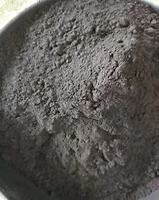
(when was silicon carbide patented)
Silicon carbide might sound like a term from a sci-fi movie, but this tough material is everywhere today. It’s in your phone, your car, and even space rockets. But when did this powerhouse first get its legal stamp of approval? Let’s dig into the gritty history of how silicon carbide became a patented marvel.
The story starts in the late 1800s. Back then, inventors were racing to create materials that could handle the heat of industrialization. Factories needed stronger tools, better abrasives, and more durable parts. Enter Edward Goodrich Acheson, a tinkerer with a knack for chemistry. In 1891, Acheson was messing around with clay and carbon, trying to make artificial diamonds. He heated the mix in an iron bowl, using an ordinary carbon arc lamp. What he got instead of diamonds was a bluish-black crystal that scratched glass like a champ. He called it “carborundum,” thinking it was a mix of carbon and corundum. Spoiler: it wasn’t.
Acheson knew he’d stumbled on something big. He filed a patent application in 1892. The paperwork dragged on, but on February 28, 1893, U.S. Patent No. 492,767 finally landed. This patent covered both the method of making silicon carbide and the product itself. The timing was perfect. Factories were hungry for materials that could grind, cut, and polish metal without crumbling. Carborundum fit the bill. By 1894, Acheson’s company was pumping out tons of the stuff.
But silicon carbide wasn’t just a one-hit wonder. Over time, people realized it had more tricks up its sleeve. It could handle crazy-high temperatures, conduct electricity under certain conditions, and even shine bright in early LED experiments. None of this was obvious in the 1890s. Back then, Acheson’s team mostly sold it as sandpaper grit and grinding wheels.
Fast-forward to the 20th century. Silicon carbide found new life in electronics. Its ability to work in high-voltage, high-temperature environments made it a star in power devices. During World War II, it was used in radar systems. Later, it became key for making semiconductors and solar panels. Today, electric car makers love it for efficient power systems. Even NASA uses it to coat spacecraft parts.
The coolest part? Acheson’s original patent didn’t predict any of this. He saw carborundum as a simple abrasive. The real magic happened because later scientists kept poking at the material. They found hidden properties that turned it into a tech superstar.
Patents often lock down a single idea. But silicon carbide’s story shows how one invention can spark endless possibilities. Acheson’s gritty crystals started as a workshop accident. Now they’re part of the clean energy revolution. It makes you wonder: what other “ordinary” materials are sitting in labs right now, waiting for their moment to shine?
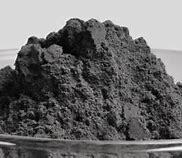
(when was silicon carbide patented)
The next time you charge your phone or drive an electric car, remember those blue-black crystals. Their journey from a failed diamond experiment to a modern marvel is a reminder that innovation doesn’t always go as planned. Sometimes the best discoveries come from happy accidents—and a patent is just the starting line.
RELATED POSTS

Future development trend of stainless steel copper alloy rods (2025-2030) weight of brass rod
is silicon carbide covalent

Application and technological innovation of concrete water-reducing admixtures: the key to improved performance and sustainability polycarboxylate superplasticizer

Molybdenum Disilicide: A Revolutionary Material molybdenum disilicide heating elements

Magic wand reveals a colorful nano-world, about nanomarterials you should know about Boron Nitride
